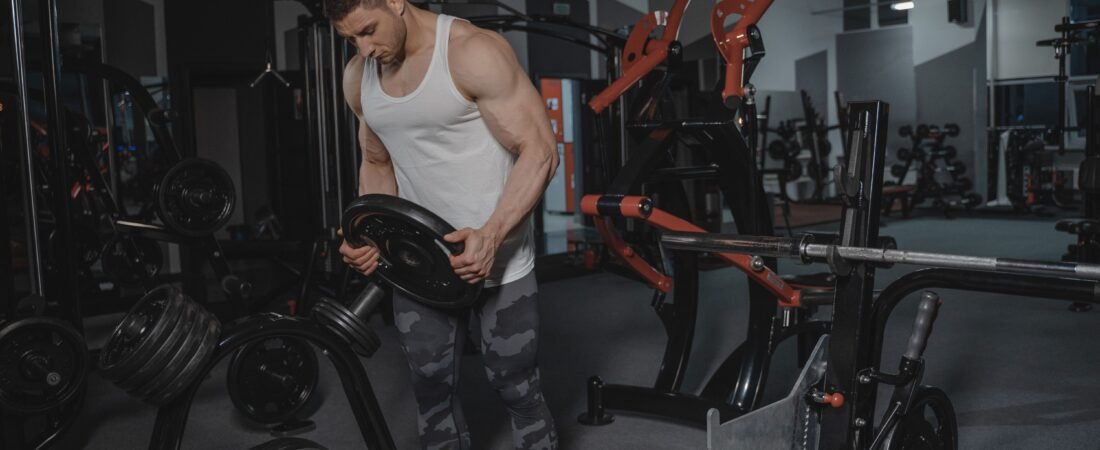
Getting stronger isn’t just about lifting heavier weights every time you train. The key is progressive overload—the process of gradually increasing the demands placed on your muscles so your body has a reason to adapt.
Whether your goal is to build muscle, increase strength, improve fitness, or break through a workout plateau, progressive overload is one of the most effective principles to include in your strength training program.
What Is Progressive Overload?
Progressive overload means gradually increasing the challenge placed on your muscles and body during exercise. This can involve lifting more weight, performing more repetitions, increasing training volume, improving exercise technique, or reducing rest periods.
For example, if you can perform 8 reps of a squat with 60 kg using good form, you might eventually progress to 9–10 reps or increase the weight to 62.5 kg.
The goal isn’t to make every workout harder. Instead, you want to create consistent, manageable progress over time.

Why Is Progressive Overload Important?
Your body adapts to the stress you place on it. If you repeatedly perform the same workout with the same weight, repetitions, and intensity, your progress may eventually slow down.
Progressive overload helps provide a continued stimulus for:
- Muscle growth
- Strength gains
- Better exercise performance
- Improved muscular endurance
- Increased training capacity
- Breaking through strength plateaus
The important part is progression. You don’t necessarily need dramatic increases. Small improvements made consistently can produce significant results over months and years.
7 Ways to Use Progressive Overload to Get Stronger
1. Increase the Weight
One of the simplest ways to apply progressive overload is to increase the weight you lift.
Suppose you’re performing the bench press for 3 sets of 8 reps at 60 kg. Once you can complete all three sets with solid technique, you could increase the weight slightly.
For example:
Week 1: 60 kg × 8 reps Week 2: 60 kg × 9 reps Week 3: 60 kg × 10 reps Week 4: 62.5 kg × 8 reps
This approach allows you to progressively increase resistance without making huge jumps.
However, don’t sacrifice proper form simply to lift heavier weights. Good technique should remain a priority.

2. Perform More Repetitions
Progressive overload doesn’t always mean adding weight.
You can also increase the number of repetitions you perform with the same load.
For example:
- Week 1: 3 × 8
- Week 2: 3 × 9
- Week 3: 3 × 10
- Week 4: Increase the weight and return to 3 × 8
This is often called double progression. You work within a target rep range and increase the weight once you can consistently reach the upper end of that range.
It’s a practical strategy for exercises such as:
- Squats
- Bench press
- Deadlifts
- Rows
- Shoulder presses
- Pull-ups
- Dumbbell exercises
3. Increase Your Training Volume
Training volume refers broadly to the amount of work you perform.
You can increase volume by adding sets, repetitions, or—in some contexts—additional exercises.
For example:
Before: 3 sets of 8 squats
After: 4 sets of 8 squats
That’s an increase in the amount of work performed.
More volume can be useful for building muscle and improving training capacity, but more isn’t automatically better. Your body also needs enough recovery, sleep, and nutrition to adapt to increased training demands.
4. Improve Your Exercise Technique
Progressive overload can also come from performing the same exercise better.
Imagine you can squat 80 kg for 8 reps, but your technique breaks down toward the end of the set. Instead of immediately adding weight, you might work on:
- Better range of motion
- More controlled repetitions
- Consistent technique
- Improved stability
- Better positioning
- Stronger bracing
If you’re able to perform the same weight and repetitions with better control and technique, you’ve improved your performance without necessarily increasing the load.
This is particularly important for beginners learning fundamental strength exercises.

5. Increase Your Range of Motion
Another way to make an exercise more challenging is to gradually increase its range of motion, when appropriate for the exercise and your individual mobility.
For example, performing a movement through a controlled, comfortable range can increase the difficulty compared with using a shortened range.
However, don’t force a deeper range of motion if you cannot maintain safe and effective technique. Your appropriate range of motion depends on the exercise, your anatomy, mobility, and training experience.
6. Reduce Rest Periods Carefully
For some exercises and training goals, reducing rest time can increase the challenge.
For example:
Week 1: 3 sets with 120 seconds of rest Week 2: 3 sets with 105 seconds of rest Week 3: 3 sets with 90 seconds of rest
This can increase training density—the amount of work performed within a particular period.
However, shorter rest periods aren’t always better for getting stronger. Heavy compound exercises often benefit from sufficient recovery between sets so you can maintain performance and technique.
If your primary goal is maximal strength, don’t rush your rest periods simply to make the workout harder.
7. Increase Training Frequency
In some situations, you can apply progressive overload by increasing how often you train a particular muscle group or movement pattern.
For example, someone who currently trains their upper body once per week might eventually benefit from distributing their training across two sessions.
Instead of performing all your weekly work in one session, you could divide it between multiple workouts.
This can help you:
- Practice key exercises more frequently
- Spread training volume across the week
- Improve exercise technique
- Manage fatigue more effectively
However, training frequency should be based on your goals, experience, schedule, and ability to recover.

How to Apply Progressive Overload Safely
Progressive overload works best when progression is gradual and intentional.
Keep track of your workouts, including:
- Exercise
- Weight
- Repetitions
- Sets
- Rest periods
- How difficult the set felt
- Technique and performance
A training log makes it easier to identify genuine progress and avoid adding weight too quickly.
A useful rule is to increase the challenge only when you can perform your current workload with consistent technique and appropriate control.
Progressive Overload vs. Training to Failure
Progressive overload doesn’t mean you need to take every set to muscular failure.
You can make progress while leaving some repetitions in reserve, particularly on demanding compound exercises.
Training close to failure can be useful, especially for hypertrophy-focused training, but constantly pushing every set to failure can also increase fatigue and make recovery more difficult.
The best approach depends on your training goals and exercise selection.
How Long Does Progressive Overload Take to Work?
There is no single timeline for everyone.
Beginners may experience relatively rapid improvements because they’re learning new movements and adapting to resistance training. More experienced lifters typically need more careful programming and smaller, slower increases.
Your progress can also be affected by:
- Training consistency
- Nutrition
- Sleep
- Recovery
- Genetics
- Training experience
- Stress
- Program design
Instead of expecting dramatic changes every week, focus on long-term strength progression.
Adding a few kilograms, completing another repetition, improving technique, or completing the same workload with less effort can all represent meaningful progress.

A Simple Progressive Overload Example
Here’s a basic example for someone using a 3 × 8–10 rep range:
| Week | Weight | Sets × Reps |
|---|---|---|
| 1 | 60 kg | 3 × 8 |
| 2 | 60 kg | 3 × 9 |
| 3 | 60 kg | 3 × 10 |
| 4 | 62.5 kg | 3 × 8 |
| 5 | 62.5 kg | 3 × 9 |
| 6 | 62.5 kg | 3 × 10 |
The exact progression will vary by exercise and individual. The important principle is that the training stimulus gradually becomes more challenging while maintaining good technique.
Final Thoughts
Progressive overload is one of the foundations of effective strength training. You don’t have to lift dramatically heavier weights every workout to get stronger.
Instead, look for sustainable ways to improve your performance—increase weight, add repetitions, increase training volume, improve technique, increase range of motion, adjust rest periods, or increase training frequency.
Combine progressive overload with a well-designed workout routine, adequate nutrition, quality sleep, and sufficient recovery, and you can build strength consistently over the long term.
The goal isn’t to make every workout harder. The goal is to become stronger over time.