
Creating a home gym is a practical way to make exercise more convenient, but choosing the right space can be surprisingly difficult. For many homeowners, the decision comes down to two popular options: a garage gym or a spare-room gym.
Both can provide an effective workout environment, but they differ in terms of space, temperature, noise, storage, flooring, and overall comfort. So, which is better—a garage gym or a spare-room gym?
The answer depends on your home, training style, available space, and budget.
What Is a Garage Gym?

A garage gym is a workout space created inside an existing garage. It is particularly popular with people who want room for larger fitness equipment such as power racks, barbells, weight plates, cable machines, rowing machines, and adjustable benches.
Advantages of a Garage Gym
One of the biggest advantages of a garage home gym is the amount of usable space. Garages often have fewer furniture-related restrictions than bedrooms or living spaces, making it easier to create a dedicated home gym setup.
More space for equipment:
A garage can accommodate bulky equipment that may be difficult to fit into a spare bedroom.
Excellent for strength training:
If your workouts involve heavy lifting, a garage can provide enough room for a squat rack, Olympic barbell, bumper plates, and lifting platform.
Less disruption to the rest of the house:
Because the gym is separated from your main living areas, equipment noise and dropped weights are less likely to disturb other household activities.
Greater flexibility:
You can design the space specifically around your training goals rather than trying to make fitness equipment work around existing furniture.
Easy equipment access:
Depending on the garage layout, large equipment can often be brought in directly through the garage door.

Disadvantages of a Garage Gym
The biggest drawback of a garage gym is that garages are not always designed to be comfortable year-round.
Temperature Control
Garages can become extremely cold in winter and hot in summer. Without proper insulation and ventilation, this can make workouts uncomfortable.
Installing insulation, improving ventilation, or adding appropriate heating or cooling can make a significant difference, although these upgrades increase the cost of your garage gym ideas.
Flooring
Concrete garage floors are durable but are not ideal for every type of exercise. Rubber gym flooring or specialist lifting mats can provide better protection for your equipment and reduce impact.
Lighting and Ventilation
Some garages have limited natural light or poor airflow. Good lighting and ventilation should therefore be considered when planning a garage workout space.
What Is a Spare-Room Gym?
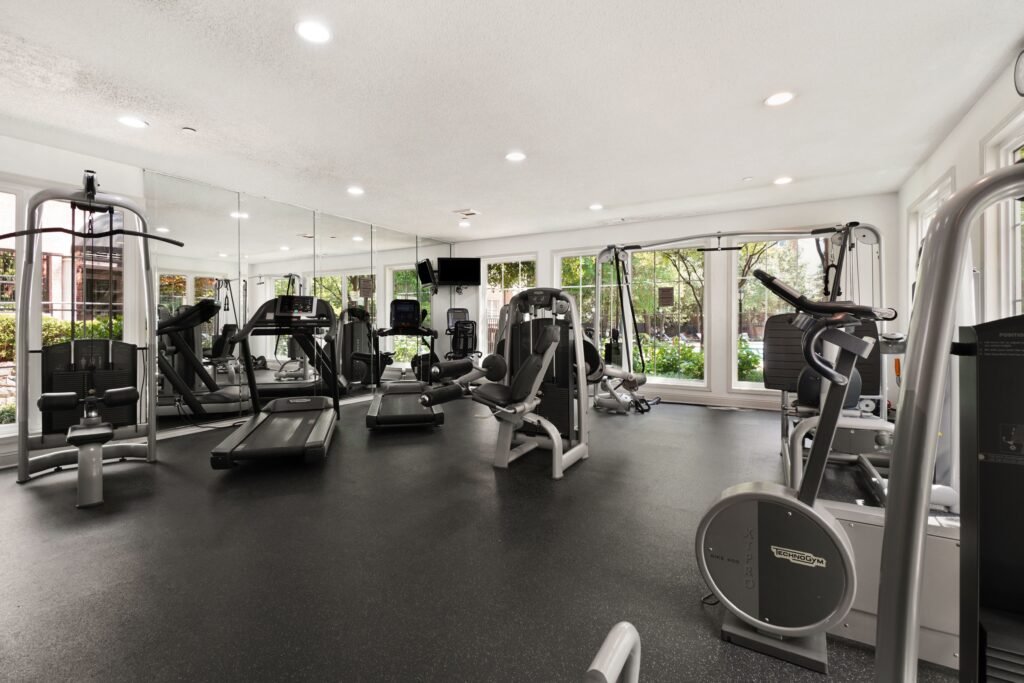
A spare-room gym uses an existing bedroom, office, or other indoor room as a dedicated exercise area.
This option is particularly appealing if you want a comfortable home workout room that is easy to access regardless of the weather.
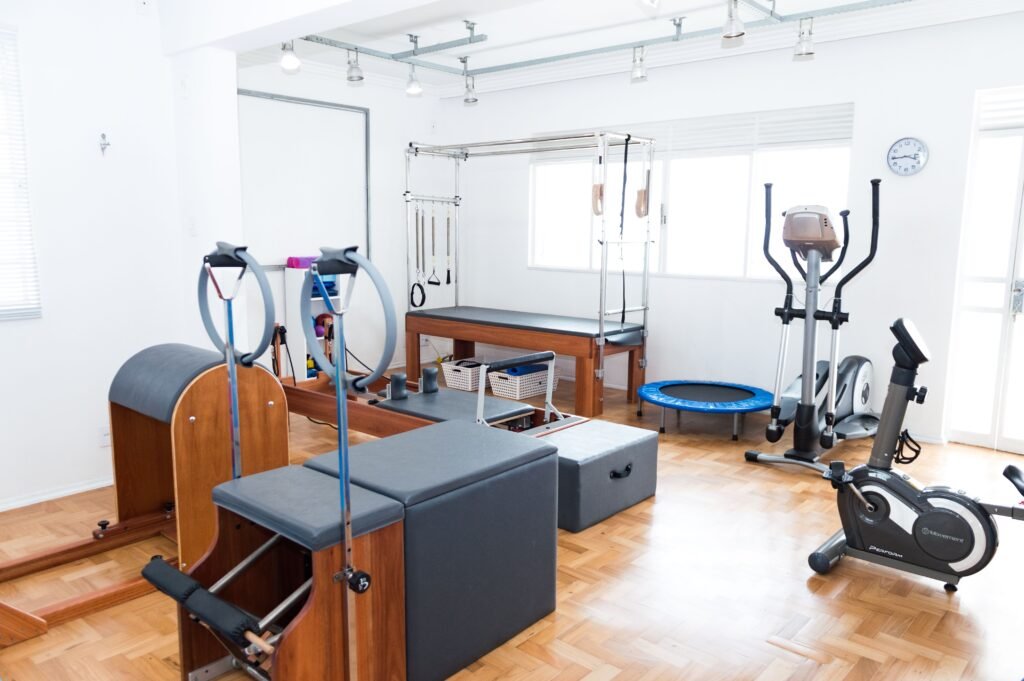
A spare room can work well for activities such as weight training, yoga, Pilates, cycling, resistance workouts, and cardio.
Advantages of a Spare-Room Gym
Comfortable Year-Round Environment
One of the biggest benefits of an indoor gym is temperature control. Your home’s existing heating and ventilation systems can make the room comfortable throughout the year.
Convenient Access
You don’t have to walk outside to reach your workout space. This can make it easier to fit short workouts into a busy schedule.
Better for Quiet Workouts
A spare room can be ideal for activities such as stretching, yoga, mobility training, and bodyweight workouts.
Easier to Create a Finished Look
Because the room is already part of your home, it may require fewer structural improvements than a garage. You can add mirrors, appropriate flooring, storage, lighting, and wall-mounted accessories to create a polished home gym room.
Disadvantages of a Spare-Room Gym
Limited Space
The main limitation is usually floor area. A typical spare bedroom may not provide enough room for a full power rack, large cardio machines, free weights, and other equipment.
Noise and Vibration
Heavy lifting can create noise and vibration that travels through floors and walls. This is especially important if the room is above another bedroom or living area.
Losing a Multi-Purpose Room
Converting a spare bedroom into a gym means giving up some of its original function. If you regularly need the room for guests, work, or storage, a permanent gym setup may not be practical.
Garage Gym vs Spare-Room Gym: Key Differences
| Feature | Garage Gym | Spare-Room Gym |
|---|---|---|
| Space | Usually more | Usually less |
| Temperature | May require upgrades | Generally easier to control |
| Heavy lifting | Excellent | Depends on flooring and structure |
| Noise | Usually easier to contain | Can travel through the house |
| Equipment capacity | High | Moderate |
| Convenience | Depends on weather and access | Very convenient |
| Storage | Often better | More limited |
| Comfort | Can require investment | Usually higher from the start |
| Privacy | Generally good | Depends on location |
| Conversion cost | Can be higher | Often lower |
Which Is Better for Weight Training?
If your priority is strength training at home, a garage gym can provide more flexibility.
The additional floor space makes it easier to install a power rack, lifting platform, adjustable bench, and substantial weight storage. It also gives you more room to move around equipment safely.
However, a spare-room gym can still work extremely well for strength training if you focus on compact equipment. An adjustable bench, dumbbells, resistance bands, a compact rack, and adjustable weights can create an effective small home gym without requiring a large room.
Which Is Better for Cardio?
For cardio, either option can work.
A spare room may be more comfortable for a treadmill, exercise bike, cross trainer, or rowing machine because it offers easier temperature control.
A garage, however, can be useful when you want several pieces of equipment or additional space around them.
If you plan to use a treadmill in a garage, consider temperature, ventilation, dust, moisture, and electrical requirements before installation.
Which Is Better for Small Spaces?
A spare-room gym is often the more practical choice when you have limited floor space but already have an unused room.
You can create a compact workout area with:
- Adjustable dumbbells
- Resistance bands
- A folding bench
- A yoga mat
- Kettlebells
- Wall-mounted storage
- A compact exercise bike
The key is choosing versatile equipment that serves multiple purposes.
Which Is Better for Families?
A garage gym can offer more separation from the main living areas, which may be useful in a busy household.
On the other hand, a spare-room gym can be more convenient if you want to supervise children or remain close to everyday household activities while exercising.
The better option depends on how your household uses the available space.
How Much Does a Home Gym Cost?
The cost of a home gym varies considerably depending on the equipment and modifications required.
A basic spare-room gym might only require flooring, dumbbells, resistance equipment, and a bench. A more advanced garage gym could involve insulation, electrical work, flooring, storage, heating, and larger strength-training equipment.
Rather than spending your entire budget on equipment, consider the space itself. A well-designed budget home gym with a few versatile pieces of equipment can be more useful than a room filled with machines you rarely use.
How to Choose Between a Garage and Spare Room
Before deciding, consider these questions:
1. What type of training do you do?
Heavy strength training generally benefits from more space, while yoga, mobility, bodyweight training, and compact resistance workouts can work well in a spare room.
2. How much equipment do you need?
If you want multiple machines, a squat rack, extensive free weights, and storage, the garage may offer greater flexibility.
3. How often will you train?
Convenience matters. If going outside to a cold garage makes you less likely to exercise, an indoor room may be a more practical choice.
4. What is your budget?
Remember to include flooring, lighting, ventilation, heating, storage, and other improvements—not just exercise equipment.
5. Will the space have another purpose?
A spare room may need to remain available for guests or work. A garage may already have storage or parking requirements.
Garage Gym or Spare-Room Gym: The Bottom Line
There is no universal answer to the garage gym vs spare-room gym debate.
A garage gym can be particularly useful if you want more space, heavy-duty equipment, and a dedicated area for serious strength training. A spare-room gym can be more convenient and comfortable, especially for people who prefer an indoor workout environment and compact equipment.
Ultimately, the best home gym is the one that fits your available space, training goals, budget, and lifestyle—and makes it easy for you to exercise consistently.
Whether you choose a garage gym setup or a spare-room home gym, focus on good flooring, sensible equipment choices, adequate ventilation, safe storage, and enough open space to train comfortably.