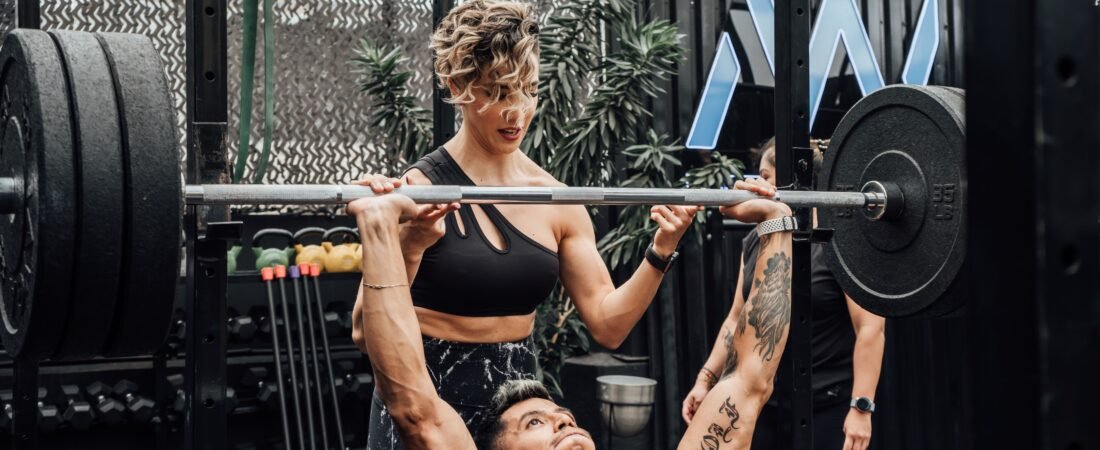
If you want to build muscle, improve strength, burn calories, and get fitter, you don’t necessarily need a complicated workout routine. Some of the most effective exercises are simple, compound movements that train multiple muscle groups at the same time.
The best full body exercises combine strength, stability, coordination, and functional movement. They can help you develop a stronger lower body, upper body, and core while making your workouts more efficient.
Among the many exercises available, five movements stand out as excellent foundations for a full body strength routine: squats, push-ups, deadlifts, overhead presses, and planks.
These exercises cover several fundamental movement patterns and can be adapted for beginners as well as more experienced lifters. Current resistance-training guidance from the American College of Sports Medicine also emphasizes that consistency is more important than complicated programming when it comes to getting results.
Why Choose Full Body Exercises?
A full body workout is designed to train several major muscle groups within the same session rather than focusing on just one body part.
Compound exercises are particularly useful because they involve multiple joints and muscles. This means you can train more of your body with fewer exercises, making full body training a practical choice when you have limited time.
A well-designed routine can target your:
- Legs and glutes
- Chest
- Back and posterior chain
- Shoulders
- Arms
- Core
- Grip and overall stability
Exercises such as squats, deadlifts, presses, and push-ups are frequently included in strength-focused full body programs because they provide a high training stimulus without requiring dozens of different movements.
The Top 5 Best Full Body Exercises
1. Squats
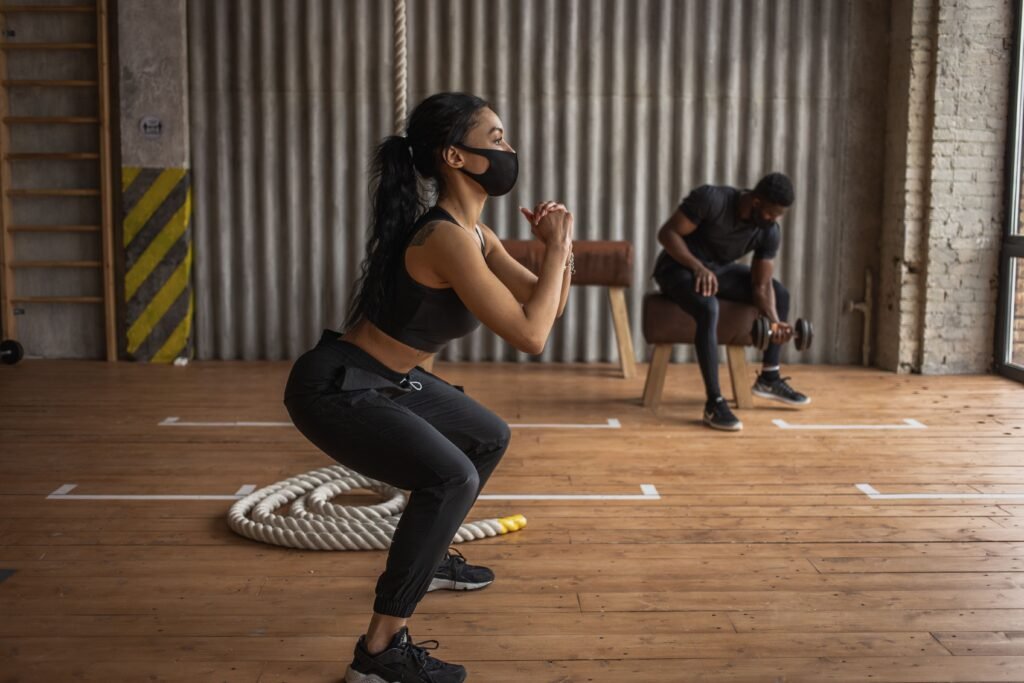
The squat is one of the best lower-body exercises and an excellent foundation for a full body workout.
Although the primary focus is on the legs and glutes, squats also require your core and upper body to stabilize your position. Depending on the variation, you can perform squats using your body weight, dumbbells, kettlebells, or a barbell.
Muscles Worked by Squats
Squats primarily train:
- Quadriceps
- Glutes
- Hamstrings
- Core muscles
- Lower back and stabilizing muscles
How to Perform a Basic Squat
- Stand with your feet approximately shoulder-width apart.
- Keep your chest lifted and brace your core.
- Push your hips back and bend your knees.
- Lower your body under control while keeping your feet firmly planted.
- Drive through your feet to return to the standing position.
- Repeat for your desired number of repetitions.
Beginner tip: Start with bodyweight squats before adding resistance. Once your technique is consistent, progress to goblet squats, dumbbell squats, or barbell squats.
Squats are particularly valuable because lower-body strength plays an important role in everyday movements such as sitting, standing, climbing stairs, and lifting objects.
2. Push-Ups
If you’re looking for one of the best bodyweight exercises for upper-body strength, push-ups are difficult to beat.
The push-up primarily trains the chest, shoulders, and triceps while requiring the abdominal and other core muscles to stabilize your body.

Muscles Worked by Push-Ups
Push-ups target:
- Chest
- Triceps
- Shoulders
- Core
- Upper back stabilizers
How to Perform a Push-Up
- Place your hands slightly wider than shoulder-width apart.
- Extend your legs behind you and create a straight line from your head to your heels.
- Brace your core and keep your hips from dropping.
- Bend your elbows and lower your chest toward the floor.
- Push through your hands to return to the starting position.
- Repeat while maintaining controlled technique.
If a standard push-up is too difficult, begin with incline push-ups using a stable elevated surface. You can gradually lower the height as you become stronger.
If regular push-ups become easy, you can increase the challenge with variations such as close-grip push-ups, decline push-ups, or weighted push-ups.
Push-ups are also convenient because they require little or no equipment, making them an excellent choice for a full body workout at home.
3. Deadlifts
The deadlift is one of the most effective compound exercises for developing overall strength, particularly through the posterior chain.
The movement teaches you to hinge at the hips and lift a load from the ground while maintaining a strong, stable position.

Muscles Worked by Deadlifts
Deadlifts primarily train:
- Glutes
- Hamstrings
- Lower back
- Upper back
- Core
- Forearms and grip
Because deadlifts involve many large muscle groups, they can be highly demanding. Proper technique should always take priority over lifting heavier weights.
How to Perform a Basic Deadlift
- Stand with your feet approximately hip-width apart.
- Position the weight close to your body.
- Hinge at your hips and bend your knees to reach the weight.
- Brace your core and keep your back in a stable position.
- Push through the floor while extending your hips and knees.
- Stand tall without excessively leaning backward.
- Lower the weight under control.
Beginner tip: Learn the hip-hinge movement with a light weight or elevated starting position before progressing to heavier deadlifts.
A trap-bar deadlift can also be an accessible alternative for some people. The important goal is to choose a variation you can perform with good technique and progressively improve over time.
4. Overhead Press
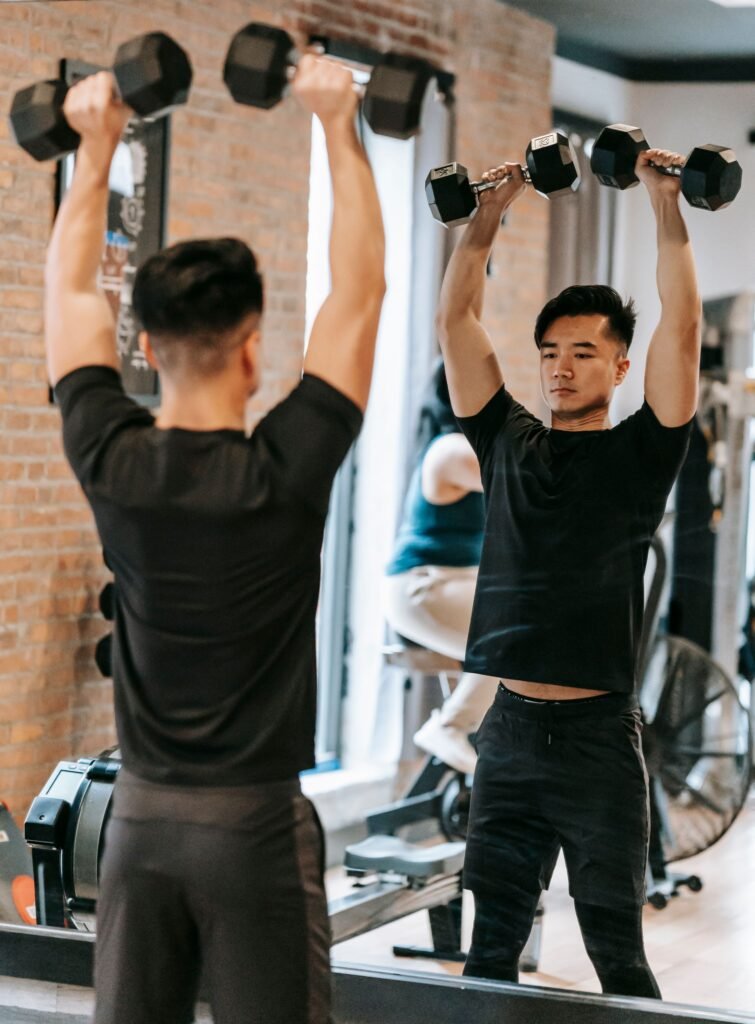
The overhead press is an excellent exercise for developing upper-body strength and shoulder stability.
Unlike the push-up, which involves horizontal pushing, the overhead press trains a vertical pushing movement. This makes it a useful addition to a balanced full body strength workout.
Muscles Worked by the Overhead Press
The overhead press primarily trains:
- Shoulders
- Triceps
- Upper chest
- Upper back stabilizers
- Core
You can perform an overhead press using a barbell, dumbbells, kettlebells, or resistance bands.
How to Perform an Overhead Press
- Stand tall with your feet around shoulder-width apart.
- Hold the weights at shoulder level.
- Brace your core and keep your ribs controlled.
- Press the weights upward.
- Finish with your arms extended overhead without forcing your joints into an uncomfortable position.
- Lower the weights slowly back to shoulder level.
- Repeat.
Avoid turning the movement into a backbend. Keep your core engaged and use a weight that allows you to maintain good technique.
The overhead press is especially useful for people who want to build stronger shoulders and improve upper-body strength.
5. Plank
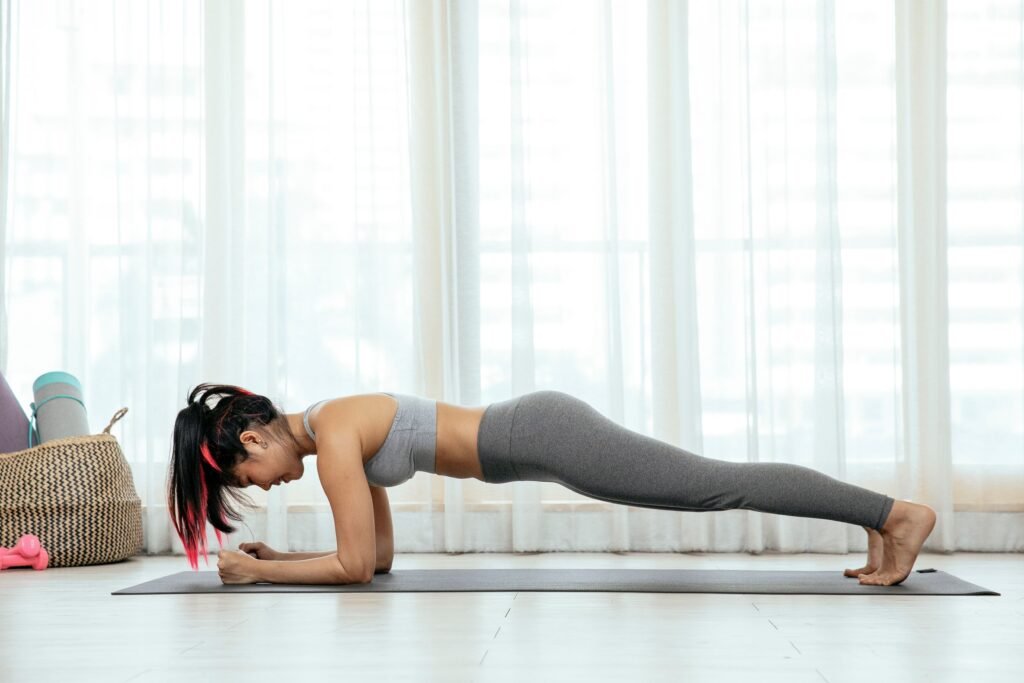
The plank may look simple, but it is one of the most useful core exercises for developing trunk stability.
Unlike exercises that repeatedly bend the spine, the plank challenges you to maintain a stable body position while resisting movement.
Muscles Worked by Planks
Planks engage:
- Abdominal muscles
- Obliques
- Deep core muscles
- Glutes
- Shoulders
- Upper back
How to Perform a Plank
- Place your forearms on the floor with your elbows underneath your shoulders.
- Extend your legs behind you.
- Keep your body in a straight line from your head to your heels.
- Brace your core and squeeze your glutes.
- Avoid letting your hips sag or rise excessively.
- Hold the position while breathing normally.
Beginners can start with shorter holds, such as 10–20 seconds, and gradually increase the duration as their core endurance improves.
You can also perform an elevated plank or knee plank if a standard plank is too challenging.
How to Combine These 5 Exercises Into a Full Body Workout
You don’t need to perform hundreds of repetitions to get a productive workout. A simple routine using these five exercises can provide a strong foundation for full body strength training.
Beginner Full Body Workout
| Exercise | Sets | Reps/Time |
|---|---|---|
| Squats | 2–3 | 8–12 reps |
| Push-ups | 2–3 | 5–12 reps |
| Deadlifts | 2–3 | 6–10 reps |
| Overhead press | 2–3 | 8–12 reps |
| Plank | 2–3 | 15–30 seconds |
Rest as needed between sets, particularly after demanding exercises such as squats and deadlifts.
If you’re new to resistance training, start conservatively and focus on learning the movements. As your fitness improves, you can gradually increase repetitions, resistance, or training volume.
How Often Should You Do a Full Body Workout?
For many people, two or three full body workouts per week can be a practical starting point.
The ideal training frequency depends on your experience, recovery, goals, schedule, and the amount of training you perform. The latest ACSM resistance-training guidance emphasizes consistency and matching training variables to your individual goals rather than relying on unnecessarily complicated routines.
Give your body enough time to recover between challenging sessions, especially when you are new to strength training.
How to Progress Your Full Body Workout
Doing the same workout forever without increasing the challenge can eventually limit your progress.
You can make your full body workout progressively harder by:
- Increasing the weight
- Performing additional repetitions
- Adding another set
- Improving your exercise technique
- Increasing your range of motion where appropriate
- Moving to a more challenging exercise variation
- Reducing assistance on easier variations
The key is gradual progression rather than trying to make every workout extremely difficult.
For example, if you can comfortably perform three sets of 10 push-ups with excellent technique, you might gradually work toward 12–15 repetitions or progress to a more challenging variation.
Best Full Body Exercises for Beginners
If you’re a beginner, you don’t need to start with heavy weights or advanced exercises.
A beginner-friendly progression could look like this:
- Squat: Bodyweight squat → goblet squat
- Push-up: Wall push-up → incline push-up → floor push-up
- Deadlift: Hip hinge → light dumbbell deadlift → barbell or trap-bar deadlift
- Overhead press: Light dumbbells → heavier dumbbells or barbell
- Plank: Elevated plank → knee plank → standard plank
Learning proper form should come before increasing weight or difficulty.
Final Thoughts
The best full body exercises don’t have to be complicated. Squats, push-ups, deadlifts, overhead presses, and planks provide a simple combination of lower-body strength, upper-body pushing strength, posterior-chain development, and core stability.
Together, these exercises can form the foundation of an effective full body workout for beginners and experienced exercisers alike.
Start with manageable resistance, prioritize proper form, and progressively increase the challenge as your strength improves. Most importantly, make your training routine sustainable enough that you can follow it consistently.
Remember: the best workout isn’t necessarily the most complicated workout—it’s the one you can perform safely, progress over time, and stick with.