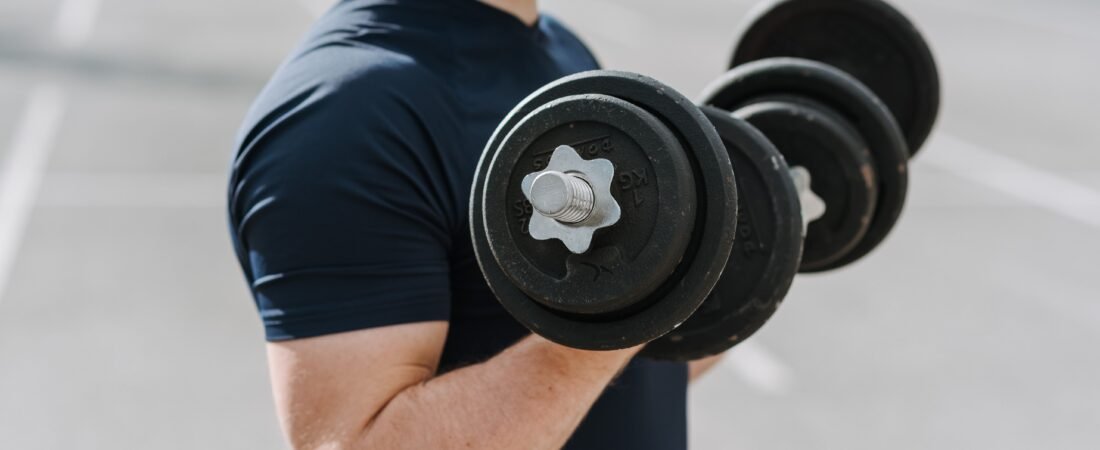
Choosing your first set of dumbbells can feel overwhelming, especially when you see so many different weights, styles and workout recommendations. If you are wondering, “What weight dumbbells should a beginner buy?”, the good news is that you do not need a full home gym to start building strength.
The best dumbbell weight for beginners depends on your current fitness level, the exercises you plan to perform and your strength goals. For most beginners, a pair of lighter dumbbells for upper-body exercises and heavier weights for lower-body movements is a practical starting point.
Whether you want to lose weight, build muscle, improve fitness or start strength training at home, this guide will help you choose the right beginner dumbbells, understand how much weight to lift and decide whether fixed or adjustable dumbbells are worth buying.
What Weight Dumbbells Should a Beginner Buy?
Quick answer: Beginners can often start with dumbbells weighing between 1kg and 5kg per hand for upper-body exercises, while lower-body exercises may require 4kg to 8kg or more per dumbbell. These are starting estimates rather than strict rules, as individual strength levels vary.
For a simple home workout setup, consider buying two pairs of dumbbells:
- Light dumbbells (1–3kg): Suitable for shoulder raises, lighter arm exercises and learning movement patterns.
- Medium dumbbells (3–5kg): Useful for bicep curls, triceps exercises, chest presses and some shoulder presses.
- Heavier dumbbells (5–8kg or more): Often useful for squats, lunges, rows and other exercises involving larger muscle groups.
You may need lighter or heavier weights depending on your experience, the exercise and how many repetitions you can perform with good technique. A beginner who is already physically strong may need more resistance than someone returning to exercise after a long break.
The most important rule is to choose a weight that challenges your muscles without compromising your form.

How to Choose the Right Dumbbell Weight for Beginners
When buying dumbbells for the first time, consider these four factors.
1. Your current fitness level
If you have never lifted weights before, start with a manageable load that allows you to practise each movement safely. You do not need to lift heavy weights immediately to benefit from strength training.
If you already participate in sports, perform bodyweight exercises or have previous gym experience, you may be comfortable starting with heavier dumbbells.
2. The exercises you want to perform
Different exercises require different amounts of resistance. For example, a lateral raise places a different demand on your muscles than a squat or a dumbbell row.
This is why buying just one pair of dumbbells may limit your options as you develop your routine.
3. Your fitness goals
Your goals influence how you select and progress your weights.
- Building muscle: Choose a weight that makes the final repetitions challenging while allowing controlled movement.
- Weight loss: Combine resistance training with regular physical activity and a sustainable nutrition plan.
- General fitness: Start with manageable weights and gradually improve your strength, control and endurance.
- Strength training at home: Consider adjustable dumbbells if you want to train different muscle groups without purchasing several fixed-weight pairs.
4. Your budget and available space
If you have limited space, adjustable dumbbells can be a convenient investment. They allow you to change the resistance for different exercises without storing multiple pairs.
If you prefer something simple and affordable, fixed-weight dumbbells are easy to use and ideal for beginners who want to start with a small collection.
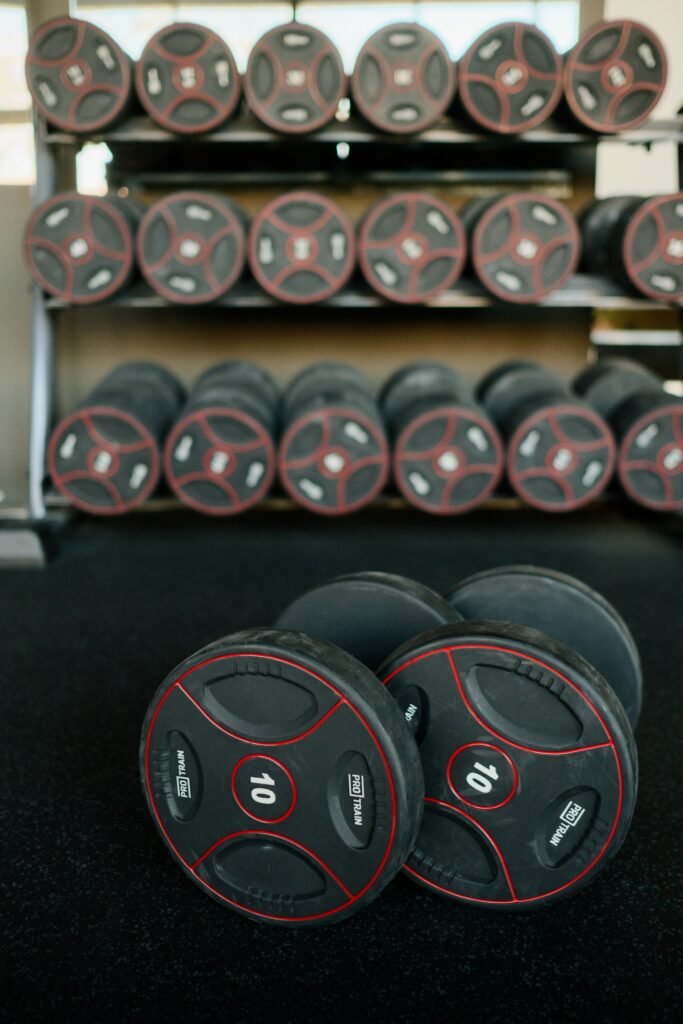
Recommended Dumbbell Weights by Exercise
One of the biggest mistakes beginners make is assuming that the same weight will work for every exercise. In reality, your shoulders, arms, back and legs can handle different loads.
The following table provides general starting ranges for healthy adults new to resistance training.
| Dumbbell exercise | Example starting weight per dumbbell |
|---|---|
| Lateral raises | 1–3kg |
| Bicep curls | 2–5kg |
| Triceps extensions | 2–5kg |
| Shoulder presses | 2–5kg |
| Chest presses | 3–6kg |
| Dumbbell rows | 3–8kg |
| Goblet squats | 4–8kg |
| Lunges | 2–6kg per hand |
| Romanian deadlifts | 4–10kg per hand |
These ranges are illustrative, not prescriptions. Your appropriate starting weight may fall outside them. For exercises such as goblet squats, one dumbbell may be held with both hands, whereas rows and Romanian deadlifts may use a dumbbell in each hand.
If you struggle to complete the movement with control, reduce the weight. If you can perform all your repetitions comfortably with plenty of energy left, consider increasing the resistance slightly.
Should Beginners Buy 2kg, 5kg or 10kg Dumbbells?
Choosing between popular dumbbell weights is easier when you understand what each option is best suited for.
Are 2kg dumbbells good for beginners?
Yes. A pair of 2kg dumbbells can be an excellent starting point for beginners who need light resistance, particularly for shoulder exercises, lighter arm workouts and practising technique.
However, you may find 2kg dumbbells too light for squats, rows and other movements involving larger muscle groups. They can be a good first purchase, but they may not provide enough resistance for every exercise as your strength improves.
Are 5kg dumbbells good for beginners?
For many people, 5kg dumbbells offer a useful middle ground. They can work well for bicep curls, some chest exercises, rows and a variety of home workouts, depending on your strength.
However, 5kg may be too heavy for certain shoulder exercises and too light for some lower-body exercises. If you choose this weight, make sure you can control it throughout each repetition.
Are 10kg dumbbells good for beginners?
A pair of 10kg dumbbells can be suitable for stronger beginners, particularly for lower-body movements and some pulling exercises. For someone completely new to lifting, however, 10kg per hand may be too heavy for curls, shoulder presses or other upper-body exercises.
You do not need to start with 10kg dumbbells to build muscle. Start with a weight that suits your ability and increase the resistance as you get stronger.
The bottom line: If you are unsure, a lighter pair combined with a medium or adjustable option will generally offer more flexibility than buying one heavy pair and trying to use it for every exercise
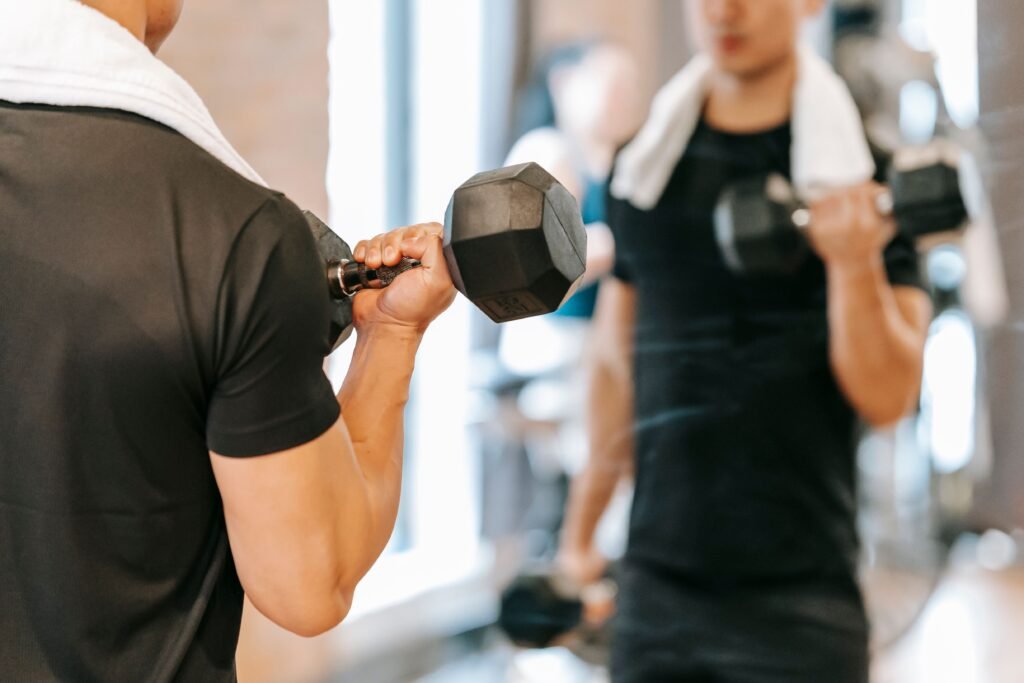
Adjustable Dumbbells vs Fixed Dumbbells: Which Is Better for Beginners?
When shopping for the best beginner dumbbells, you will generally encounter two main types: fixed-weight dumbbells and adjustable dumbbells.
Fixed-weight dumbbells
Fixed dumbbells have a set weight, such as 2kg, 5kg or 10kg.
Advantages:
- Easy to pick up and use.
- No need to change weight plates or settings.
- Useful for quick home workouts.
- Available in a wide range of weights and materials.
Disadvantages:
- You may need several pairs to train different muscle groups.
- A growing collection can take up space.
- You may need to buy heavier weights as your strength improves.
Adjustable dumbbells
Adjustable dumbbells let you change the resistance by adding or selecting different weights, depending on the design.
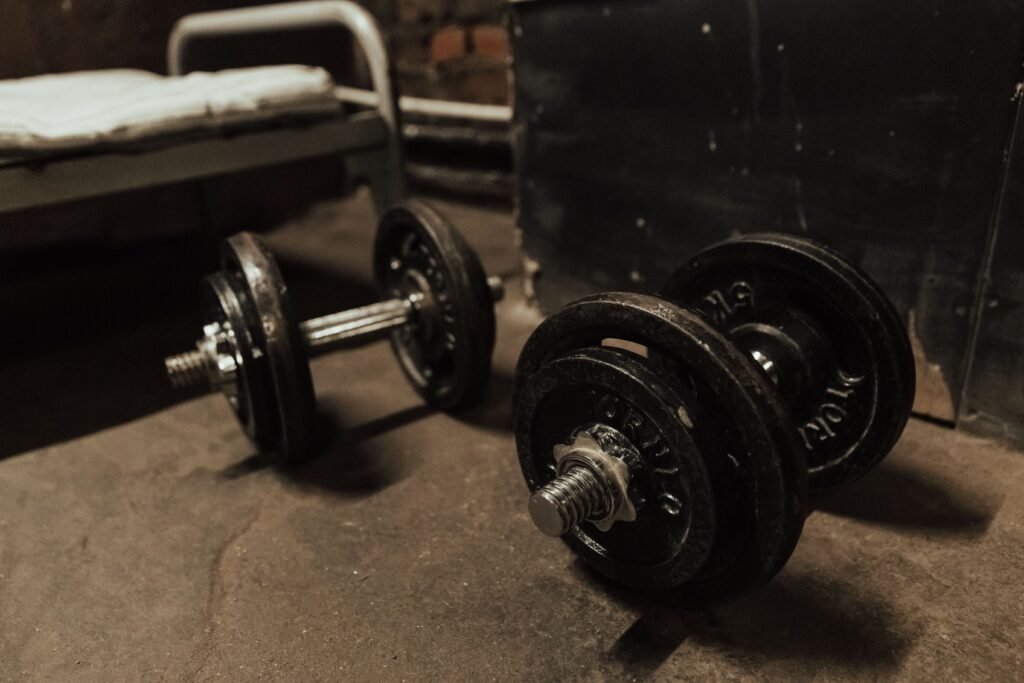
Advantages:
- Multiple weight options in one compact setup.
- Useful for full-body workouts.
- Can be more economical than buying many separate pairs.
- Allow gradual progression as your strength improves.
Disadvantages:
- Often cost more upfront than a single pair of fixed dumbbells.
- Some designs take time to adjust between exercises.
- You must check the available weight increments and maximum load before buying.
Which should you choose?
If you are on a tight budget or only plan to perform a few exercises, fixed dumbbells are a sensible choice. If you want to build a home gym and train your whole body over the long term, adjustable dumbbells may offer better value.
Before purchasing adjustable weights, check the minimum and maximum resistance, how easily the weights change and whether the increments are small enough for you to progress comfortably.
How Heavy Should Dumbbells Be to Build Muscle?
You do not have to lift the heaviest dumbbells available to build muscle. What matters is choosing an appropriate resistance, performing exercises consistently and gradually increasing the challenge.
For many beginners, a practical starting target is 8–12 controlled repetitions per set, although other repetition ranges can also be effective.
Choose a weight that allows you to:
- Complete your planned repetitions with good technique.
- Move through a comfortable, controlled range of motion.
- Feel your muscles working, particularly towards the end of the set.
- Finish without swinging the weights or using momentum to complete repetitions.
The final two or three repetitions should feel challenging, but you should still be able to maintain control. You do not need to train to complete muscular failure during every set.
As the exercises become easier, you can increase the number of repetitions, add a set or move to a slightly heavier dumbbell.
How to Progress with Dumbbell Weights as a Beginner
Progressive overload means gradually increasing the demands placed on your muscles over time. It is an important principle for improving strength and building muscle.
Follow these steps to progress safely.
- Learn the technique. Practise each exercise with a light weight or no weight before increasing resistance.
- Choose a manageable starting load. Aim to complete your planned repetitions without losing control.
- Track your workouts. Record the dumbbell weight, sets and repetitions you perform.
- Increase repetitions first if needed. If your current weight feels manageable, gradually add repetitions within your target range.
- Increase the weight when ready. Once you can complete all planned repetitions comfortably with good form, try a small increase in resistance.
- Allow time for recovery. Rest between sessions and avoid increasing the weight simply because you feel impatient to progress.
You may progress quickly in some exercises and more slowly in others. That is normal. There is no need to increase your dumbbell weights every week if your technique or recovery is not ready.
A Simple Beginner Dumbbell Workout at Home
Once you have chosen your weights, you can start with a straightforward full-body dumbbell workout.
Perform the following exercises two or three times per week, allowing recovery between sessions.
| Exercise | Sets | Repetitions |
|---|---|---|
| Goblet squats | 2–3 | 8–12 |
| Dumbbell rows | 2–3 | 8–12 per side |
| Dumbbell chest press | 2–3 | 8–12 |
| Bicep curls | 2 | 10–12 |
| Shoulder presses | 2 | 8–10 |
| Romanian deadlifts | 2–3 | 8–12 |
Start with lighter weights if you are unfamiliar with any of these movements. Warm up before training, move slowly enough to maintain control and stop if you experience sharp or unusual pain.
You do not need to perform every exercise in one session when you are starting out. You can begin with three or four movements and gradually build your routine as your confidence improves.
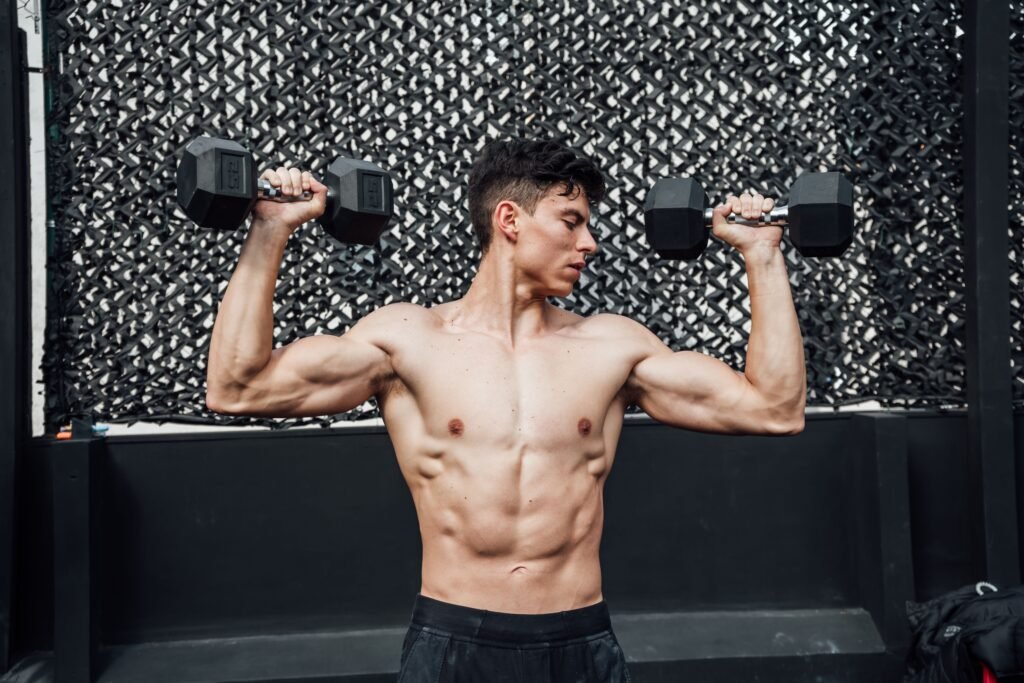
Common Mistakes to Avoid When Buying Beginner Dumbbells
Before making your purchase, avoid these common mistakes.
Buying weights that are too heavy
Heavy dumbbells may look impressive, but they are not useful if you cannot control them safely. Starting with a manageable weight helps you learn proper technique and build confidence.
Buying weights that are too light for every exercise
Very light dumbbells can be useful for certain movements, but they may not challenge your legs or back sufficiently. Consider the range of exercises you intend to perform before choosing your weights.
Choosing dumbbells based only on gender
Recommendations that suggest all women should use one weight and all men another are too simplistic. Your individual strength, experience and exercise selection matter more than gender-based assumptions.
Forgetting about future progress
If you plan to train consistently, think about how your needs might change over the next several months. Adjustable dumbbells or a few carefully selected pairs can help you avoid replacing your equipment too quickly.
Ignoring grip and comfort
Choose dumbbells that feel secure in your hands. Check the handle, shape and material, and make sure you can store the weights safely when they are not in use.
Final Thoughts: Choosing the Best Dumbbell Weight for Beginners
So, what weight dumbbells should a beginner buy? Start with a weight that allows you to learn proper technique and perform your chosen exercises comfortably while still challenging your muscles.
For many beginners, a lighter pair of 1–3kg dumbbells and a medium pair of 3–5kg dumbbells provide a useful starting point. You may also benefit from heavier weights for lower-body exercises, depending on your strength.
If you want a simple, affordable setup, start with one or two pairs of fixed dumbbells. If you plan to build a versatile home workout routine, consider adjustable dumbbells that offer room to progress.
Remember that the best dumbbells are not necessarily the heaviest or most expensive. They are the weights that suit your current ability, fit your budget and help you build a consistent strength-training habit.